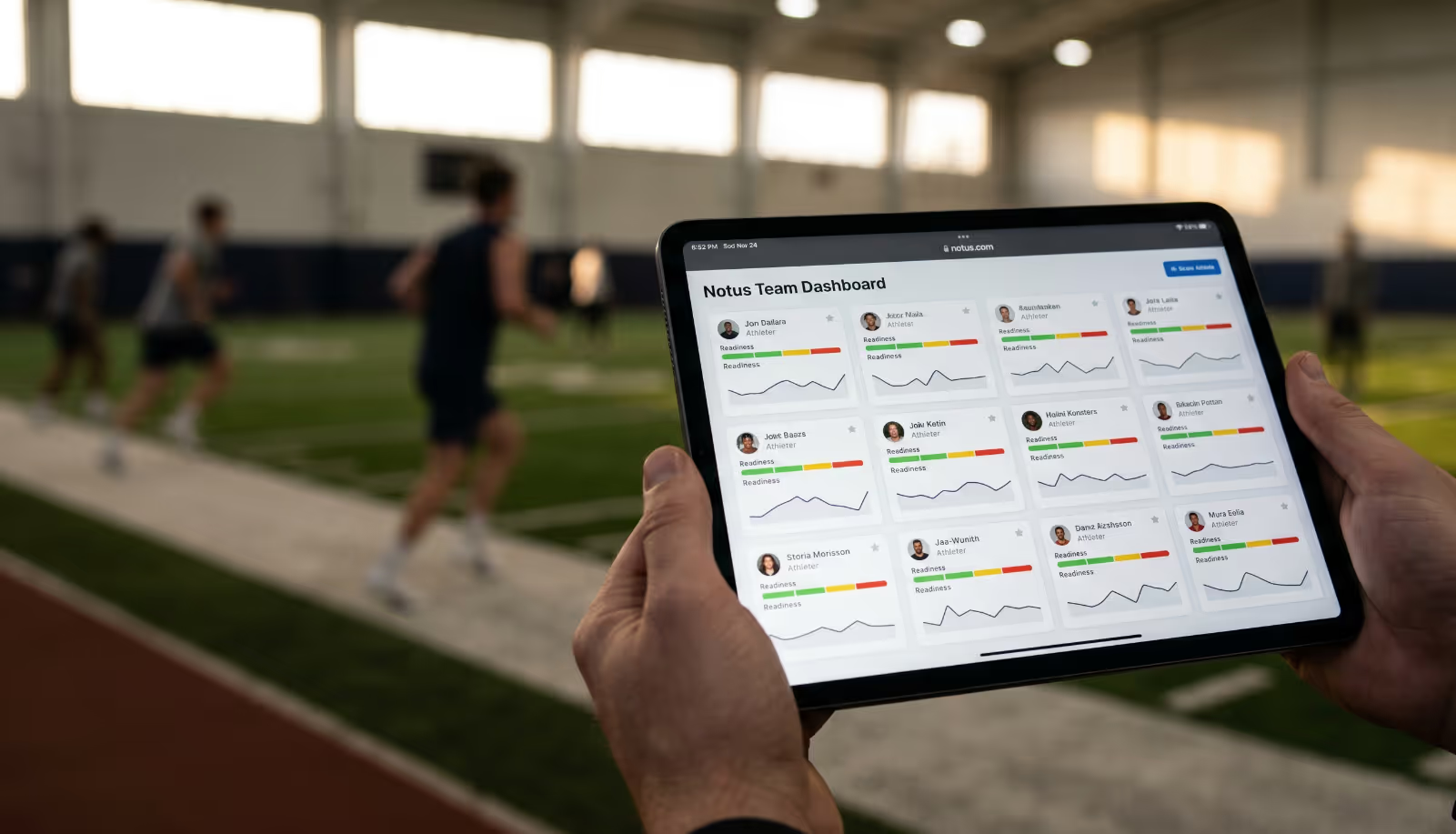
If you're a clinician considering continuous biomechanical monitoring for the first time, the volume of data can look overwhelming.
Here's what we've learned from dozens of clinics and teams deploying this for the first time — about where to start, how to read the output, and when to trust the signals.
The short version: start small. One protocol, one athlete, one question you want the data to answer.
Starting with one protocol, one athlete
Don't try to monitor everyone at once. Pick one condition you see often — ACL post-op is usually the cleanest starting point — and enroll one or two athletes.
Use the first four weeks to calibrate your own intuition against what the data shows. You'll learn more from one athlete you observe closely than from twenty you sample lightly.
Reading the data without drowning in it
The three signals that matter most at the start are inter-limb loading asymmetry, knee valgus during dynamic movements, and total daily loading volume.
Almost everything else is secondary information that becomes useful once those three are stable.
Resist the urge to look at everything. Focus on those three and build from there.
When to trust the platform and when to trust your hands
The platform sees things your hands can't — continuous, quantified, in-context movement.
Your hands and eyes see things the platform can't — tissue quality, affective state, how the athlete responds to a manual cue.
The signal you want is the one where both agree. When they disagree, that's usually where the conversation starts.
Continuous data isn't more work. It's less guessing.
A practical starting sequence:
- Pick one condition you see weekly (ACL post-op works well)
- Enroll one or two athletes at matched rehab weeks
- Track only three metrics for the first month
- Review the data with the athlete every two weeks
- Expand to additional athletes once the pattern is intuitive
Most clinics we work with start with one ACL protocol, one clinician, one athlete. Within six months, continuous monitoring becomes part of how they make every clearance decision across every condition.
Don't try to solve that at the beginning. Solve the first athlete. The rest builds itself.